
Library History
A century of stories, service, and community.
Beginnings in 1914
Big dreams from a small group of women.
In 1914, the Stanford Woman’s Club made the Lincoln County Free Public Library one of its first projects. With a little support from the Fiscal Court and a lot of volunteer spirit, the club opened a tiny library on the third floor of the courthouse. Every Saturday afternoon, volunteer librarians kept the doors open, giving the community a place to gather and read.
Growing Through the 1930s and 40s
Grants, grit, and a love of books.
Between 1938 and 1941, Lincoln County received a WPA grant to help libraries that had no funding for daily operations. This support provided a paid library assistant and even book repair materials. By the mid-1950s, the State Department of Libraries rolled in with another gift—a well-stocked bookmobile—and the Fiscal Court moved the library into the courthouse basement to make loading and unloading books easier.
The Struggle to Stay Open
Community passion kept the lights on.
For years, it was a challenge just to keep the library operating. Thanks to the tireless efforts of Mrs. Dunn, then chair of the library board, the public became aware of the library’s struggles. Community members responded with donations, memorials, and bequests—proof that people wanted their library to survive.
A Lasting Gift in 1966
One woman’s legacy shaped the library’s future.
The most significant gift came from Mrs. Harvey Helm, who left her home on Main Street to Lincoln County to be used as a library. Her will had two provisions:
County taxpayers would need to vote on a tax to maintain the library.
The front part of the home, which included a historic log structure from Stanford’s First Presbyterian Church, must remain intact if remodeling occurred.
The library’s books were moved to the Helm House in January 1966.
A Turning Point
Demonstrations, determination, and a public vote.
The State Department of Libraries stepped in again, making Lincoln County a demonstration facility with 10,000 new books, a larger bookmobile, and even new technology like a projector and copier. But there was a catch: within two years, the library board had to secure a larger permanent space or lose the support.
In 1966, voters rejected the proposed library tax. A year later, in November 1967, the issue returned to the ballot—and this time it passed with strong community support.
Building Something New
From a house to a modern library.
The original plan was to remodel the Helm House, but when funding didn’t come through, the board made a bold choice. They secured a new site at Third and Church Streets and, in 1971, opened the Harvey Helm Memorial Library—a modern, two-story brick facility that became the community’s hub for decades.
A Library for Today
Bigger spaces for bigger dreams.
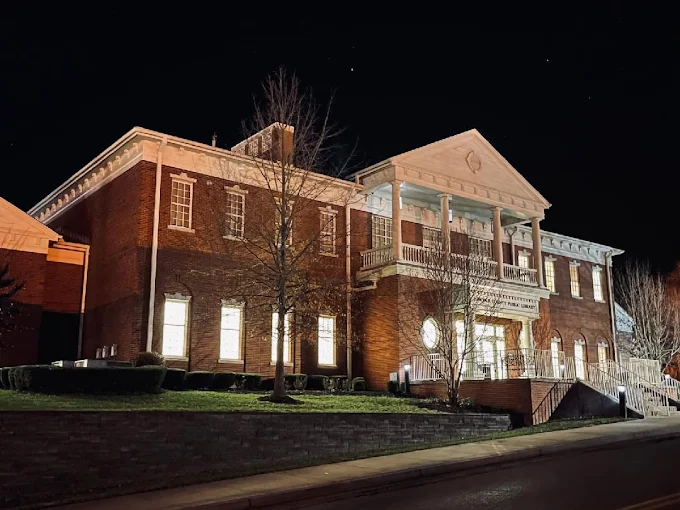
After more than 30 years, the Helm Library could no longer keep up with the county’s growing needs. On October 17, 2008, a groundbreaking ceremony was held for a new building. In the spring of 2010, the doors opened at 201 Lancaster Street, the library’s current home, where it continues to serve as a welcoming space for reading, learning, and community connection.
Quick Links
Sign Up For The LCPL Newsletter
Stay up-to-date with library events, new books, and digital resources-- delivered right to your inbox.
Subscribe